Lost luggage · Future of travel · Airline economics
Dear Traveler: You Don't Have to Carry Your Closet
Bag fees keep climbing, carousels keep losing bags, and we keep packing as if nothing else has changed. An open letter to everyone who flies, about the freedom of landing with nothing to collect.

By Mathias Nana · 3 min read ·
Dear fellow traveler,
I have owned the same two pairs of jeans since 2019, and my whole wardrobe fits in one bag. You would think packing would be easy for someone like me, but it never is. Before every trip, I still stand over that bag deciding what to bring, pay to check it, wait for it at the carousel and drag it to the hotel. Then, a few days later, I do it all again to fly home. If a man with two pairs of jeans feels the weight of that routine, I suspect you feel it too.
The Bag Costs More Than the Fee
Start with the part you can see on your receipt. On many United flights, the first checked bag now costs $45, up from $35 earlier this year, and other carriers have raised their fees too. Across the United States, passengers paid airlines about $7.4 billion in baggage fees last year. Those fees will not make your fare itself cheaper if you skip them, but they are the easiest cost on the trip to remove.
The bigger cost never appears on a receipt. It is the hour at the carousel, the queue at the bag drop and the taxi you take because you cannot carry everything on a train. It is also the first evening of your trip spent unpacking instead of walking the city. We have accepted these costs for so long that we no longer count them, which is exactly why they deserve a second look.
The Bag Is the Weakest Part of the Trip
Then there is the risk. Airlines have become much better at handling luggage, and the rate of mishandled bags fell sharply last year. Even so, about 24 million bags were still mishandled in 2025, which means millions of travelers landed somewhere without the clothes they planned to wear. I was one of them once, in Shanghai, and my bags landed four days after I did.
A bag that never gets checked cannot be lost, delayed or damaged. That simple fact is what made me ask a different question. Instead of asking how to pack better, I started asking why the clothes need to fly at all.
What Freedom Could Look Like
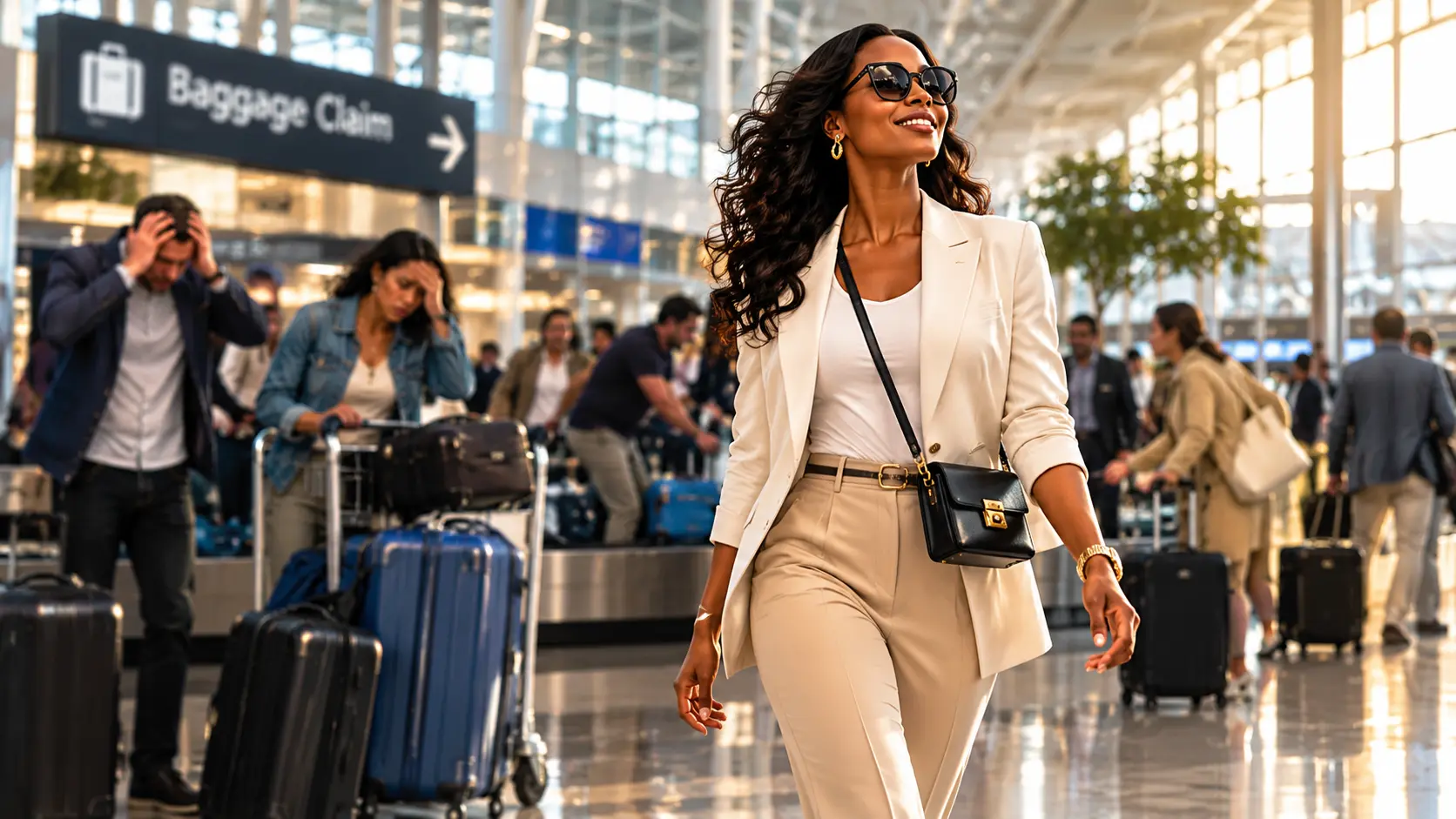
Imagine landing with only a small bag on your shoulder. A wardrobe curated for your size, your style and your trip is already waiting at your hotel: the outfit for Tuesday's meeting, the shirt for Saturday's wedding and a jacket for the weather you checked the night before. You walk out of the airport straight into the city, because there is nothing to collect. When the trip ends, you leave the clothes behind, and someone else takes care of them.
That is the idea behind NOLUGGS, the luggage-free travel model I am researching. We already rent the suit for the wedding and the dress for the gala, and services in the United States and Europe now rent everyday clothes to millions of people. Travel is one of the last places where we still insist on carrying everything we own. I am testing whether it has to stay that way.
The Questions You Should Ask First
I would not ask you to trust this blindly, and the travelers in my research did not either. In focus groups with frequent travelers, the first questions were the ones you are probably asking now: will it fit, is it clean, and will it feel like me? When the prototype answered those, by using real measurements, matching sizes across countries and explaining how every garment is cleaned, the questions did not disappear. They became sharper: what is this fabric made of, where is my order right now, and who do I call if something goes wrong?
The most useful answer came from the travelers themselves. Several asked to see reviews and photos from real people who had already made the trip, because they trusted other travelers more than any promise from the service. When the conversation turned to the environment, some described sustainability as a bonus rather than the reason to switch. Convenience has to win first, and that is the standard I am now building and testing against.
The people who fly are the ones who will decide whether this future happens. Tell me what would make you trust a wardrobe waiting at your destination, and tell me where you would want to try it first.
Mathias Nana Doctoral Researcher