Clothing rental · Future of travel
Dear Fashion Retailers: Your Next Customer Is Landing Without a Suitcase
Rental is moving into the store. An open letter on the skills retailers will need to serve the traveler, and why the winners will dress a customer head to toe from a single shop.

By Mathias Nana · 4 min read ·
Dear fashion retailers,
In 2019, I landed in Shanghai for a module of my Global MBA, and my two checked bags did not land with me. By the time I reached the city, the shops were already closed, and class started the next morning. Behind those dark windows were racks of shirts, trousers and shoes in my size, and none of them could help me. My bags landed four days later, but the question that night never left me: what if the store, not the suitcase, had been the one carrying my wardrobe?
Rental Is Already Moving Into Your Stores
That question is no longer far-fetched, because retailers have already started to answer it. Department stores in the United States and Britain have opened their doors to rental partners, from Nordstrom's tie-up with Rent the Runway to Selfridges and John Lewis working with HURR. The clearest signal comes from Urban Outfitters, whose own rental service, Nuuly, grew its sales by about 50% last year and has turned profitable. A retailer that already owns the stock, the brands and the stores starts rental with advantages a pure rental company has to buy.
Those advantages only matter if customers trust what they rent. Owning the shelves is not the same as earning the right to rent from them. The retailers that win this market will be the ones that learn a set of skills most of them have never needed.
Trust Is the New Product
Those skills start with trust, and the travelers in my own research were specific about what it takes. In focus groups with frequent travelers, the first doubts were about fit and cleanliness: will this size work in a country with a different sizing system, and how do I know the garment was properly cleaned after the last person wore it? Once the prototype answered those, by using real measurements, matching sizes across countries and showing how garments are cleaned, the questions moved closer to the shelf. Travelers wanted to know what each piece is made of, partly because of allergies, how sizes differ from one brand to another, and who pays if something is damaged or returned late. Outside research points the same way: in one survey of thousands of women in Norway and Germany, more than three in four said odor-free garments were a condition for even considering rental.
Every one of those questions is a skill a retailer can build. Hygiene has to be a published standard that customers can see, not a promise in small print. Quality assurance means inspecting, grading and repairing each garment between rentals, the way a car rental company checks every vehicle between drivers, and labeling it with fabric, care and brand-specific sizing. Clear terms for damage and late returns, a quick swap when something does not fit, and reviews from people who rented before turn the remaining doubts into routine service. None of this is glamorous, but it is the difference between a rental program that grows and one that quietly closes after a season.
Dress Them Head to Toe From One Store
The last skill is about logistics, and it is where retailers can beat everyone else. Delivery is already the most expensive step in getting goods to customers: industry studies put the last mile at around 41% of supply chain costs. Every extra source in an order means another pickup, another van and another return, so an outfit assembled from three suppliers costs far more to move than one packed in a single store. A retailer that can dress a customer head to toe, from shirt and trousers to shoes, jacket and belt, turns one order into one pickup, one delivery and one return.
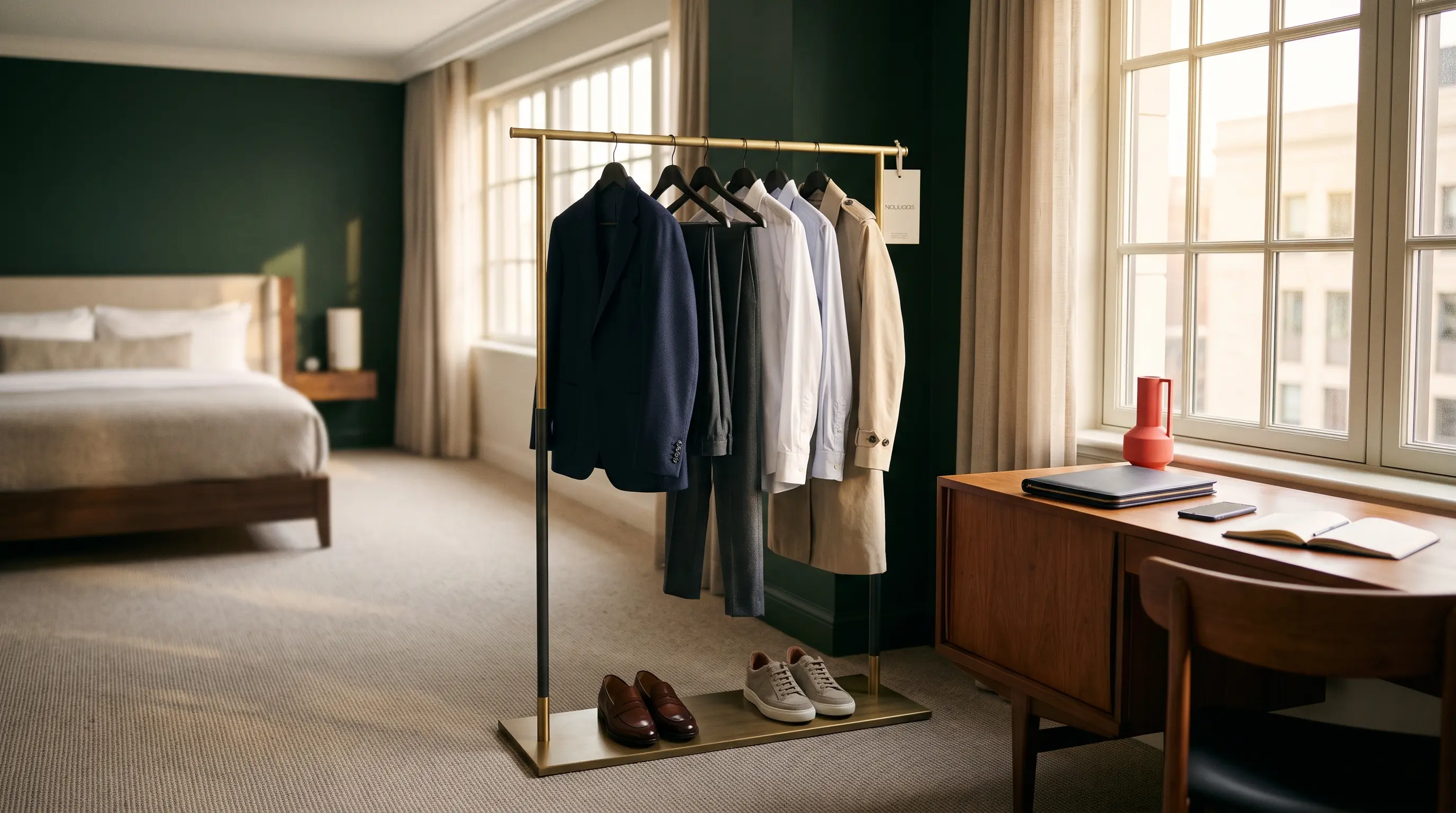
That changes how a store should think about its assortment. Instead of selling single items, it can build complete wardrobes by occasion and climate: a three-day business trip, a weekend wedding, a week of cold-weather meetings. Stores that can fill those wardrobes from their own shelves become the natural partners for any service that dresses travelers. Stores that cannot will end up supplying fragments to someone else's order.
Why the Traveler Is Your Best Rental Customer
And no customer fits this model better than the traveler. A trip arrives with everything a retailer wishes it knew in advance: the dates, the destination, the size, the weather and the occasions. The order can be prepared days ahead and delivered to a hotel a short drive away. That is the gap NOLUGGS, the luggage-free travel model I am researching, is built to fill: a booking layer that connects travelers to trusted local retailers, so a wardrobe curated for their size, style and trip is waiting when they land. I am still testing and evaluating this model, and the retailers who help shape it will shape the standard everyone else has to meet.
Retailers already have what this market needs most: the clothes, the brands and the stores close to where travelers sleep. What remains is the trust work and the logistics work, and both are skills that can be learned. If you run a store, a brand or a rental program, I would welcome the chance to learn where this idea fits your business and where it does not.
Mathias Nana Doctoral Researcher