Lost luggage · Future of travel
Dear Airports: What Will You Build When the Bags Stop Coming?
Behind every terminal runs a machine built for suitcases. An open letter on what that space could become if more travelers flew without one.

By Mathias Nana · 4 min read ·
Dear airport leaders,
On May 15, a fault in the baggage system at Heathrow's Terminal 5 left around 20,000 bags behind. Photos showed suitcases piled across the terminal, some flights left without all their luggage, and British Airways went on to seek up to £10 million in compensation from the airport. I have stood at enough carousels to know the feeling of the people in those photos: the belt stops, the crowd thins, and your bag is not there. What struck me most was not the failure itself, but how much of an airport exists just to move our clothes.
The Machine Behind the Wall
That machine is far bigger than most travelers imagine. Terminal 5 alone runs more than 18 kilometers of conveyors built to move up to 12,000 bags an hour, and Heathrow's systems sort as many as 140,000 departing bags on a single day. One baggage-system supplier says that at some airports, up to two-thirds of terminal floor space serves baggage processing. Every meter of it has to be built, powered, staffed and maintained, whether the bags inside hold business suits or clothes nobody will wear.
And the machine keeps asking for more. Heathrow is now building a new baggage system for Terminal 2, designed to handle 31,000 bags a day and replacing equipment that is about 30 years old, in a project planned to take six years. Across the industry, mishandled bags cost airlines an estimated $6.3 billion last year, about $260 for every bag that went astray. Airports have become remarkably good at running this machine, but they have rarely been asked whether all of it needs to exist.
Fewer Bags, Different Airports
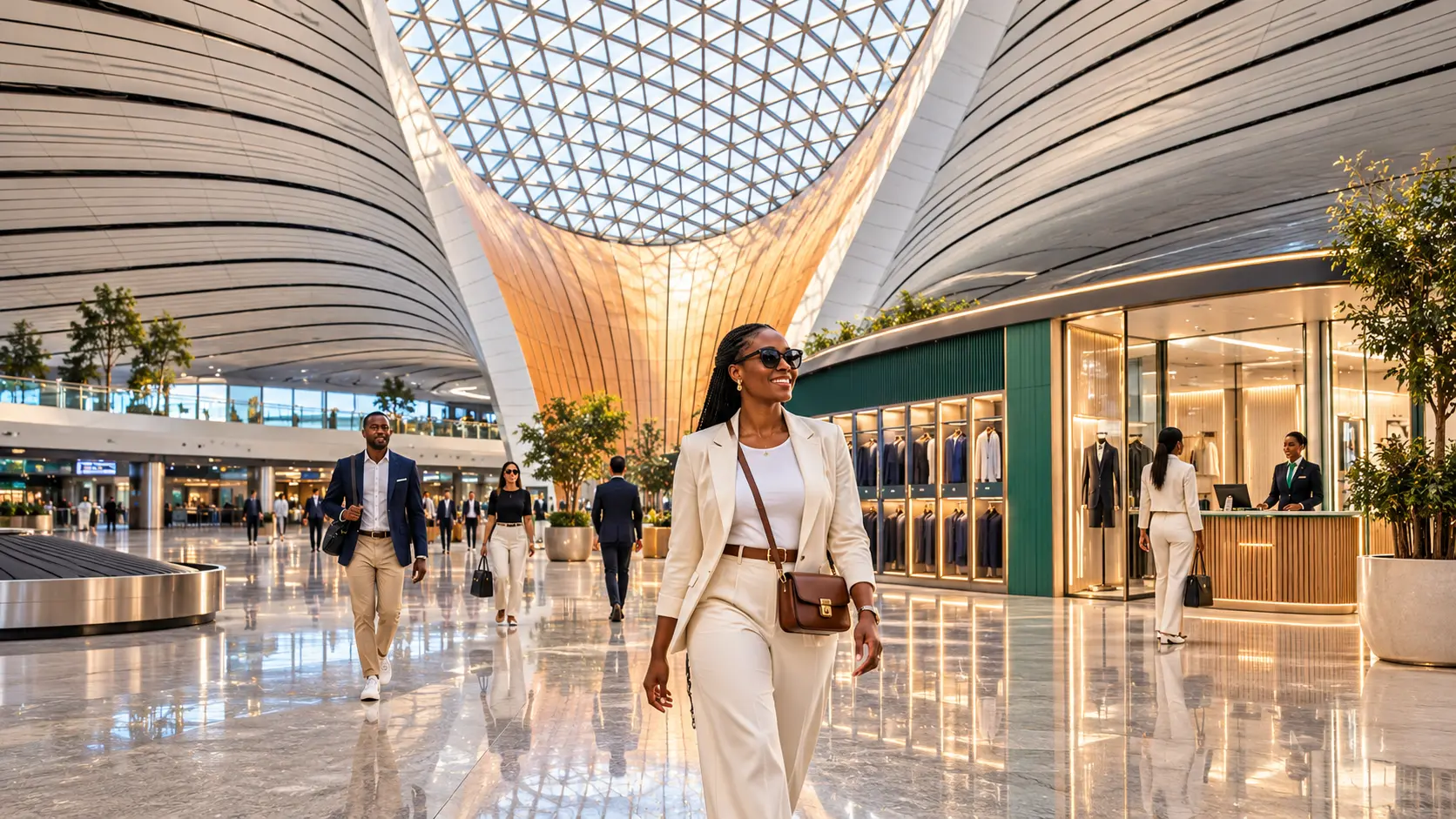
That question is no longer theoretical, so picture the answer. Imagine Heathrow or JFK on a busy morning in 2040, when nine out of ten passengers fly without a checked bag. The check-in hall is half its old size, nobody queues at the bag drop, and arriving travelers walk past quiet carousels straight to the trains with a light bag on one shoulder. Beneath the terminal, conveyors that once sorted 140,000 suitcases a day carry a fraction of that, and the halls they used to fill have found new jobs. This is an imagined future, not a forecast, but it is a useful picture to hold when planning the next twenty years.
Getting there would not require bags to disappear overnight. Millions of people already rent clothes at home for weddings, offices and parties, and early pilots have shown that a wardrobe can wait at the destination instead of flying with its owner. Each traveler who stops checking a bag eases the pressure on the baggage hall long before any building changes. Every bag that stays home is capacity an airport does not have to build.
What the Freed Space Could Become
So here is my proposal, in three parts. First, turn part of baggage reclaim into a wall of wardrobe lockers, like the parcel lockers shoppers already use in malls and grocery stores. A traveler lands, scans a code on their phone and opens a locker holding clothes curated for their size, style and trip, with a small fitting room and swap point beside the lockers for anything that does not fit. Returning works the same way in reverse: the clothes go back into a locker on the way to departures, and the traveler flies home with nothing to check. For the airport, it turns a room built for waiting into space that earns rent from the partners who fill those lockers.
Second, give the basement a new job. The spaces under a terminal are secure, connected to roads, open around the clock and run by people who already know logistics, which is exactly what a garment cleaning and quality-check hub needs. An airport that cleans, inspects and stages rental clothes for its city turns a cost center into a service, and becomes the natural home for the retailers, professional stylists and cleaning partners who will supply this market.
Third, plan the next expansion with fewer bags in mind. A baggage system takes years and large budgets to replace, as Heathrow's six-year Terminal 2 project shows. If luggage-free travel grows, the next baggage hall can be smaller, and the money saved can go into what passengers actually notice: shorter walks, faster transport and more space to rest.
Start With One Corner
None of this needs a new terminal to begin. It needs one bank of lockers in one arrivals hall, one retail partner and one season of honest measurement: how many travelers use it, what they think of it, and what it changes behind the wall. That is the kind of evidence my doctoral research on NOLUGGS, a luggage-free travel model I am testing, is built to produce. I do not yet claim how many bags it would remove; I claim the question deserves a test at a real airport.
Airports have spent decades perfecting a machine for moving our clothes, and that expertise is exactly what the next model will need. If you run a terminal, plan its future or manage its retail, I would welcome the chance to learn where this idea breaks in your building, and where it might fit.
Mathias Nana Doctoral Researcher