Airline economics · Sustainable travel
What Does Your Checked Bag Really Cost: The Fee or the Carbon?
Airlines raised bag fees this year because fuel got expensive, and fuel is spent moving weight. A traveler and researcher on what a checked bag adds to a flight, where the fee works as a climate signal, and where it falls short.

By Mathias Nana · 4 min read ·
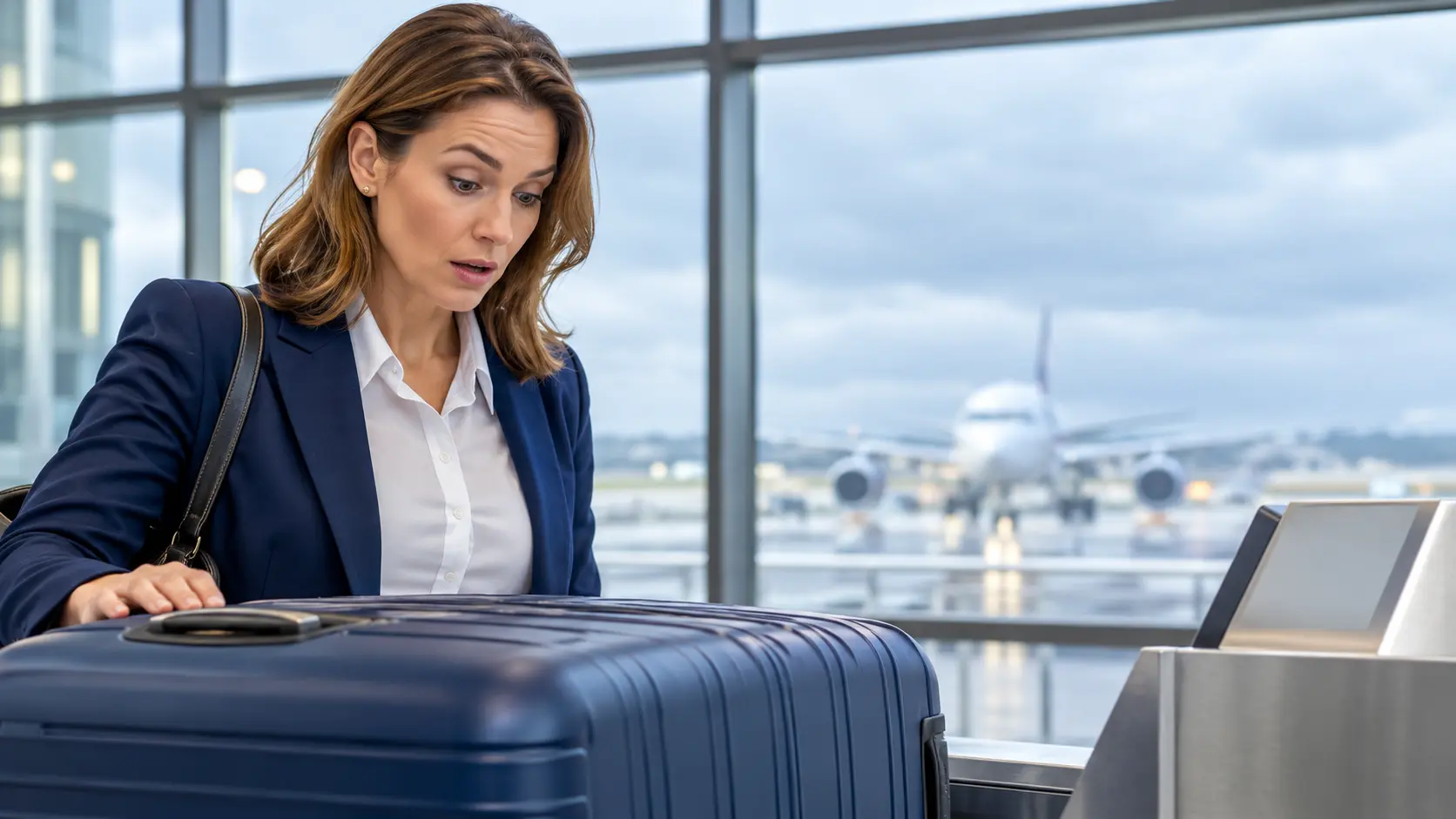
In 2019, I landed in Shanghai for a module of my Global MBA, but my two checked bags did not. Class started the next morning, the shops were already closed, and I stood in a hotel room with nothing to wear except the clothes I had flown in. My bags reached me four days later, carried on flights I never took. I remember thinking how much effort the system spent moving clothes I could not use. That thought has stayed with me through every bag fee since.
This year, that thought showed up at the check-in counter as a price. Jet fuel became far more expensive in 2026, US airlines raised their checked-bag fees in response, and JetBlue raised its fees twice. Airlines say the fees help cover fuel while keeping base fares competitive, and the logic holds: fuel is spent moving weight, and a checked bag is weight. That same weight also turns into carbon, so the bag fee is one of the few prices travelers pay that follows, however loosely, what their luggage costs the climate. As a carbon signal the fee is rough, though, and travelers who want to cut both the cost and the carbon should know where it works.
Why Are Airlines Raising Bag Fees in 2026?
Airlines are raising bag fees because fuel became their fastest-growing cost this year. The International Air Transport Association expects jet fuel to average almost 70% more in 2026 than in 2025, which pushes fuel to roughly 31% of airline operating costs. The same forecast expects airlines to burn about as much fuel as last year. The bill grew because each gallon cost more, while the amount burned stayed about the same.
An airline facing that bill has a few levers: raise fares, cut flights or charge more for optional services. Raising the bag fee affects only the travelers who check a bag, and JetBlue said as much when it presented its increase as a way to keep base fares competitive. That choice is reasonable, and travelers have seen it before, since US airlines first charged for checked bags during an earlier fuel spike. What stands out this time is how closely the fee now follows the cost of moving weight. That raises a question beyond money: what does the bag itself add to the flight?
Does a Checked Bag Really Add Carbon to a Flight?
Yes. Each bag adds only a small amount, but the effect grows with distance and with the number of bags. By IATA's rule of thumb, each extra tonne on board burns about 30 kg of fuel per flight hour. ICAO counts every kilogram of jet fuel burned as 3.16 kg of CO2. Together these mean weight becomes fuel and fuel becomes carbon, in proportion to how long the bag stays in the air.
This is why airlines hunt for weight in places most passengers never see. They have moved paperwork onto tablets, trimmed what they load for catering and service, and fitted lighter components, because every kilogram counts across thousands of flights. A single suitcase is a small share of a full aircraft, and it would be wrong to suggest that skipping one bag makes a flight green. The fair claim is narrower: a checked bag always adds fuel and carbon, and across millions of holiday bags that adds up. The harder question is whether the fee actually nudges travelers in the right direction.
Do Bag Fees Help Cut Carbon?
Only partly, because the fee prices the bag, not its weight. A checked bag costs the same whether it holds a light weekend wardrobe or hits the airline's weight limit, and the free carry-on still flies on the same plane. Moving clothes from the hold to the overhead bin saves the traveler money, but it cuts carbon only if the traveler packs less. The fee rewards packing light, and the carbon falls only when the packing really is lighter.
Some airlines have tested going further. Japan Airlines ran a trial with Sumitomo that let visitors to Japan rent clothes at their destination instead of packing them, and JAL estimated an average saving of 7.7 kg of CO2 per use, based on the flights involved. When the trial launched, at least one expert dismissed the idea as silly. Any rental model has to show that the laundering and delivery it adds do not cancel out the weight it saves. The trial's real value is the question it raised: what if part of the luggage never had to fly at all?
Who Should Pay for the Weight?
Everyone who moves the weight shares its cost, and expensive fuel has simply made the traveler's share visible. Bag fees were not designed as climate policy, and I would not ask airlines to pretend they are. Still, a year of expensive fuel has taught travelers a lesson about weight that the industry has known for decades: packing less saves money, and it also trims the fuel and carbon each flight carries. That link between the clothes we carry and the fuel we burn is what I am now testing with NOLUGGS, a clothing-rental model for travelers. I would gladly learn from the airlines and researchers who have studied it longer than I have.
If your bag fee were priced by the kilogram instead of by the bag, what would you leave at home?
Mathias Nana Founder, NOLUGGS · Doctoral Researcher
This article draws on published industry forecasts, airline statements and emissions standards, and is not investment advice.